









par·a·nor·mal (par'uh-nôr'muhl) adj. eyond the range of normal experience or scientific explanation: such
paranormal phenomena as telepathy; a medium's paranormal powers.
Paranormal is an umbrella term used to
describe a wide variety of reported
anomalous phenomena. According to the
Journal of Parapsychology, the term
paranormal describes "any phenomenon that
in one or more respects exceeds the limits
of what is deemed physically possible
according to current scientific
assumptions."
Paranormal describes subjects studied under
parapsychology, which deals with psychic
reported phenomena like telepathy, extra-
sensory perception, psychokinesis, and
post-mortem survival studies like
reincarnation, ghosts, and hauntings. However, as a broader category, the
paranormal sometimes describes subjects outside the scope of parapsychology,
including anomalous aspects of UFOs, some creatures that fall under the scope of
cryptozoology, purported phenomena surrounding the Bermuda Triangle, and many
other non-psychical subjects
eyond the range of normal experience or scientific explanation: such
paranormal phenomena as telepathy; a medium's paranormal powers.
Paranormal is an umbrella term used to
describe a wide variety of reported
anomalous phenomena. According to the
Journal of Parapsychology, the term
paranormal describes "any phenomenon that
in one or more respects exceeds the limits
of what is deemed physically possible
according to current scientific
assumptions."
Paranormal describes subjects studied under
parapsychology, which deals with psychic
reported phenomena like telepathy, extra-
sensory perception, psychokinesis, and
post-mortem survival studies like
reincarnation, ghosts, and hauntings. However, as a broader category, the
paranormal sometimes describes subjects outside the scope of parapsychology,
including anomalous aspects of UFOs, some creatures that fall under the scope of
cryptozoology, purported phenomena surrounding the Bermuda Triangle, and many
other non-psychical subjects
eyond the range of normal experience or scientific explanation: such
paranormal phenomena as telepathy; a medium's paranormal powers.
Paranormal is an umbrella term used to
describe a wide variety of reported
anomalous phenomena. According to the
Journal of Parapsychology, the term
paranormal describes "any phenomenon that
in one or more respects exceeds the limits
of what is deemed physically possible
according to current scientific
assumptions."
Paranormal describes subjects studied under
parapsychology, which deals with psychic
reported phenomena like telepathy, extra-
sensory perception, psychokinesis, and
post-mortem survival studies like
reincarnation, ghosts, and hauntings. However, as a broader category, the
paranormal sometimes describes subjects outside the scope of parapsychology,
including anomalous aspects of UFOs, some creatures that fall under the scope of
cryptozoology, purported phenomena surrounding the Bermuda Triangle, and many
other non-psychical subjects

or believers, ghosts are generally seen to be the spirit or soul of a deceased
person. Alternative theories expand on that idea and include belief in the ghosts
of deceased animals. Sometimes the term "ghost" is used synonymously with any spirit
or demon, however in popular usage the term typically refers to a deceased person.
The belief in ghosts as souls of the departed is
closely tied to the concept of animism, an ancient
belief which attributed souls to everything in
nature. As the nineteenth-century anthropologist
James Frazer explained in his classic work, The
Golden Bough, souls were seen as the creature
within that animated the body. Although the human
soul was sometimes symbolically or literally
depicted in ancient cultures as a bird or other
animal, it was widely held that the soul was an
exact reproduction of the body in every feature,
even down to clothing the person wore. This is
depicted in artwork from various ancient cultures,
including such works as the Egyptian Book of the
Dead, which shows deceased people in the afterlife
appearing much as they did before death, including
the style of dress.
A widespread belief concerning ghosts is that they
are composed of a misty, airy, or subtle material.
Anthropologists speculate that this may also stem
from early beliefs that ghosts were the person
within the person, most noticeable in ancient
cultures as a person's breath, which upon exhaling
in colder climates appears visibly as a white
mist. This belief may have also fostered the metaphorical meaning of "breath" in certain languages,
such as the Latin spiritus and the Greek pneuma, which by analogy became extended to mean the soul.
In the Bible, God is depicted as animating Adam with a breath.
Numerous theories have been proposed by skeptics to provide non-paranormal explanations for ghosts
sightings. Although the evidence for ghosts is largely anecdotal, the belief in ghosts throughout
history has remained widespread and persistent.
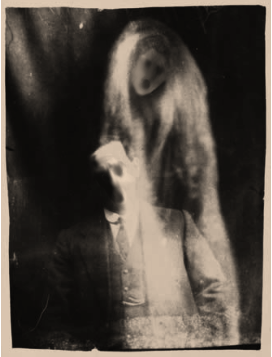
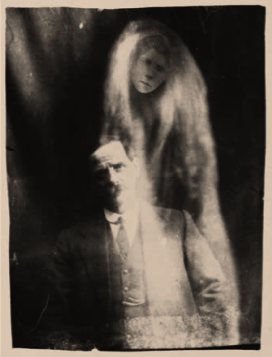
A ghost is defined as the apparition of a deceased person, frequently similar in appearance to that
person, and usually encountered in places she or he frequented, or in association with the person's
former belongings. The word "ghost" may also refer to the spirit or soul of a deceased person, or to
any spirit or demon. Ghosts are often associated with hauntings, which is,
according to the Parapsychological Association, "the more or less regular
occurrence of paranormal phenomena associated with a particular locality
(especially a building) and usually attributed to the activities of a discarnate
entity; the phenomena may include apparitions, poltergeist disturbances, cold
drafts, sounds of footsteps and voices, and various odors." The term ghost has been
replaced by apparition in parapsychology, because the word ghost is deemed
insufficiently precise. The belief in ghost as souls of the departed is closely
tied to the ancient concept of animism, which attributed souls to everything in
nature, including human beings, animals, plants, rocks, etc.
Although the human soul was sometimes symbolically or literally depicted in ancient
cultures as a bird or other animal, it was widely held that the soul was an exact
reproduction of the body in every feature, even down to clothing the person wore.
This is depicted in artwork from various ancient cultures, including such works as
the Egyptian Book of the Dead, which shows deceased people in the afterlife
appearing much as they did before death, including the style of dress. Although the
evidence for ghosts is largely anecdotal, the belief in ghosts throughout history
has remained widespread and persistent.
person. Alternative theories expand on that idea and include belief in the ghosts
of deceased animals. Sometimes the term "ghost" is used synonymously with any spirit
or demon, however in popular usage the term typically refers to a deceased person.
The belief in ghosts as souls of the departed is
closely tied to the concept of animism, an ancient
belief which attributed souls to everything in
nature. As the nineteenth-century anthropologist
James Frazer explained in his classic work, The
Golden Bough, souls were seen as the creature
within that animated the body. Although the human
soul was sometimes symbolically or literally
depicted in ancient cultures as a bird or other
animal, it was widely held that the soul was an
exact reproduction of the body in every feature,
even down to clothing the person wore. This is
depicted in artwork from various ancient cultures,
including such works as the Egyptian Book of the
Dead, which shows deceased people in the afterlife
appearing much as they did before death, including
the style of dress.
A widespread belief concerning ghosts is that they
are composed of a misty, airy, or subtle material.
Anthropologists speculate that this may also stem
from early beliefs that ghosts were the person
within the person, most noticeable in ancient
cultures as a person's breath, which upon exhaling
in colder climates appears visibly as a white
mist. This belief may have also fostered the metaphorical meaning of "breath" in certain languages,
such as the Latin spiritus and the Greek pneuma, which by analogy became extended to mean the soul.
In the Bible, God is depicted as animating Adam with a breath.
Numerous theories have been proposed by skeptics to provide non-paranormal explanations for ghosts
sightings. Although the evidence for ghosts is largely anecdotal, the belief in ghosts throughout
history has remained widespread and persistent.
A ghost is defined as the apparition of a deceased person, frequently similar in appearance to that
person, and usually encountered in places she or he frequented, or in association with the person's
former belongings. The word "ghost" may also refer to the spirit or soul of a deceased person, or to
any spirit or demon. Ghosts are often associated with hauntings, which is,
according to the Parapsychological Association, "the more or less regular
occurrence of paranormal phenomena associated with a particular locality
(especially a building) and usually attributed to the activities of a discarnate
entity; the phenomena may include apparitions, poltergeist disturbances, cold
drafts, sounds of footsteps and voices, and various odors." The term ghost has been
replaced by apparition in parapsychology, because the word ghost is deemed
insufficiently precise. The belief in ghost as souls of the departed is closely
tied to the ancient concept of animism, which attributed souls to everything in
nature, including human beings, animals, plants, rocks, etc.
Although the human soul was sometimes symbolically or literally depicted in ancient
cultures as a bird or other animal, it was widely held that the soul was an exact
reproduction of the body in every feature, even down to clothing the person wore.
This is depicted in artwork from various ancient cultures, including such works as
the Egyptian Book of the Dead, which shows deceased people in the afterlife
appearing much as they did before death, including the style of dress. Although the
evidence for ghosts is largely anecdotal, the belief in ghosts throughout history
has remained widespread and persistent.



Copyright © 2011 SPOOKS - Scientific Paranormal Observation Of Kinetic Spirits - All Right Reserved














e are located in Vancouver, Washington. If you are located in the Pacific
Northwest, and are experiencing paranormal activity in your home, workplace,
or any location, we can help. S.P.O.O.K.S. is a carefully selected team of
paranormal investigators with a wide ranging skill set and far reaching
experience in the paranormal field. We are not for profit and charge nothing
for the services we provide. In the interest of investigating the paranormal, we
believe that an investigation can be a win-win situation and be as advantageous
for us as for you. We do, however, accept donation.
S.P.O.O.K.S. is primarily about the scientific study of the paranormal and
capturing evidence thereof, although our primary concern is giving you piece of
mind. Your concerns will be at the top of our list. We are professionals and are
not engaged in this endeavor for kicks. We have a myriad of state of the art
equipment and are capable of handling virtually any situation.
Northwest, and are experiencing paranormal activity in your home, workplace,
or any location, we can help. S.P.O.O.K.S. is a carefully selected team of
paranormal investigators with a wide ranging skill set and far reaching
experience in the paranormal field. We are not for profit and charge nothing
for the services we provide. In the interest of investigating the paranormal, we
believe that an investigation can be a win-win situation and be as advantageous
for us as for you. We do, however, accept donation.
S.P.O.O.K.S. is primarily about the scientific study of the paranormal and
capturing evidence thereof, although our primary concern is giving you piece of
mind. Your concerns will be at the top of our list. We are professionals and are
not engaged in this endeavor for kicks. We have a myriad of state of the art
equipment and are capable of handling virtually any situation.








HOME ACTIVITIES EVIDENCE VIDEOS VIDEOS 2 VIDEOS 3 AUDIO
PHOTOS 1 PHOTOS 2 PHOTOS 3 ABOUT NEWS LINKS LINKS 2 CONTACT